


Part Number: LF353
Hello,
We have observed a significant difference in the high-level output voltage between two lots of TI LF353 devices in the same application, and would like to confirm whether this behavior could be expected due to different device revisions or manufacturing lots.
The LF353 is powered from +5 V / -5 V and is used as an open-loop comparator with hysteresis. The output also drives an optocoupler input through a diode and series resistor.
Under the same static test condition (no input signal), we measured the following output voltages:
| Board | PCB Version | LF353 Top Marking | Output Voltage |
|---|---|---|---|
| Board 1 | CS-V1.0 | LF353 TI 46M A434 | 3.37 V |
| Board 2 | CS-V1.1 | LF353 TI 46M A434 | 3.35 V |
| Board 3 | CS-V1.1 | LF353 TI 53K CL42 | 4.49 V |
| Board 4 | ZS/JX-V1.1 | LF353 TI 53K CL42 | 4.747 V |
| Board 4, after replacing LF353 | ZS/JX-V1.1 | LF353 TI 46M A434 | 3.59 V |
The most important observation is from Board 4. We replaced only the LF353 device on the same PCB, without changing the surrounding circuit. The output voltage changed from approximately 4.747 V with the "53K CL42" device to 3.59 V with the "46M A434" device.
Therefore, the difference appears to follow the LF353 device rather than the PCB.
Both devices are marked as TI LF353. Since the LF353 is not a rail-to-rail output amplifier, the approximately 3.3–3.6 V output level at a +5 V supply appears reasonable to us. However, the approximately 4.5–4.75 V output level of the "53K CL42" devices is much closer to the positive supply rail.
Could TI please help clarify the following?
- Are "46M A434" and "53K CL42" valid TI LF353 top markings / lot or traceability codes?
- Could these devices correspond to different silicon revisions or manufacturing processes?
- Is an output high level of approximately 4.5–4.75 V with a +5 V supply expected for any TI LF353 revision under load?
- Is the observed difference between approximately 3.4 V and 4.7 V within the expected device variation?
- Are there any additional measurements we should perform to identify the cause of this difference?
We can provide the schematic, photographs of the device markings, supply voltages, output load current, and additional measurements if required.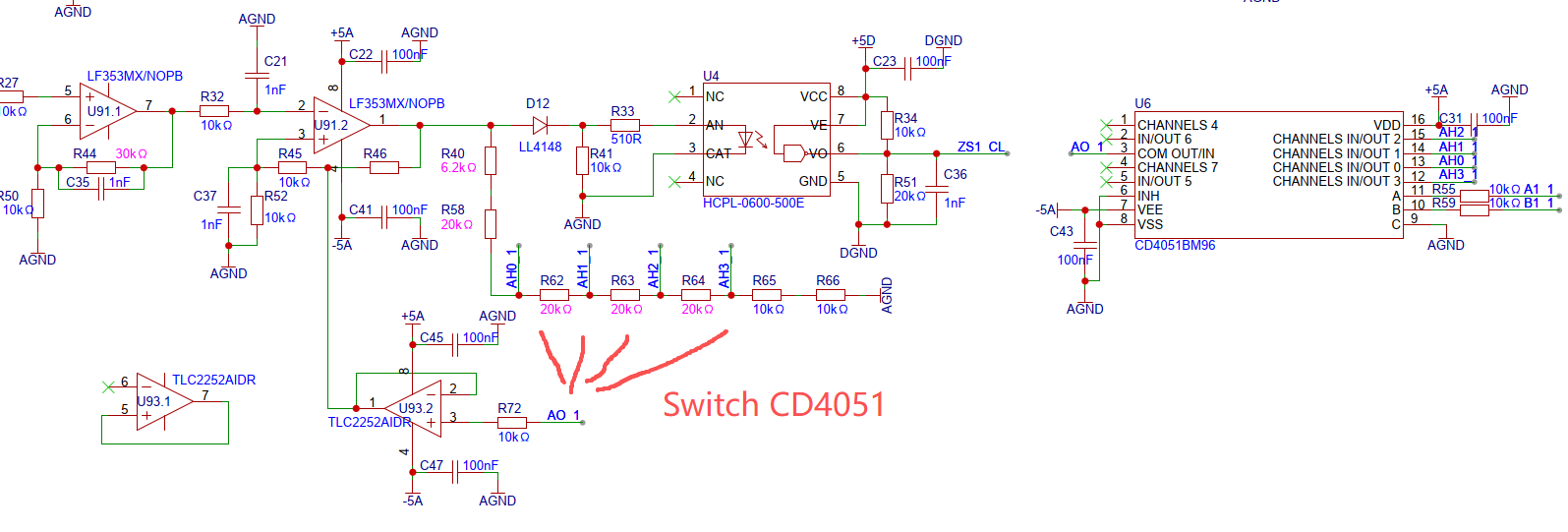
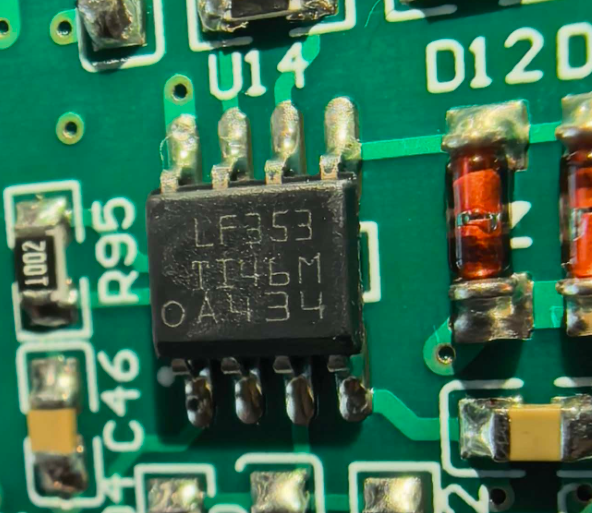
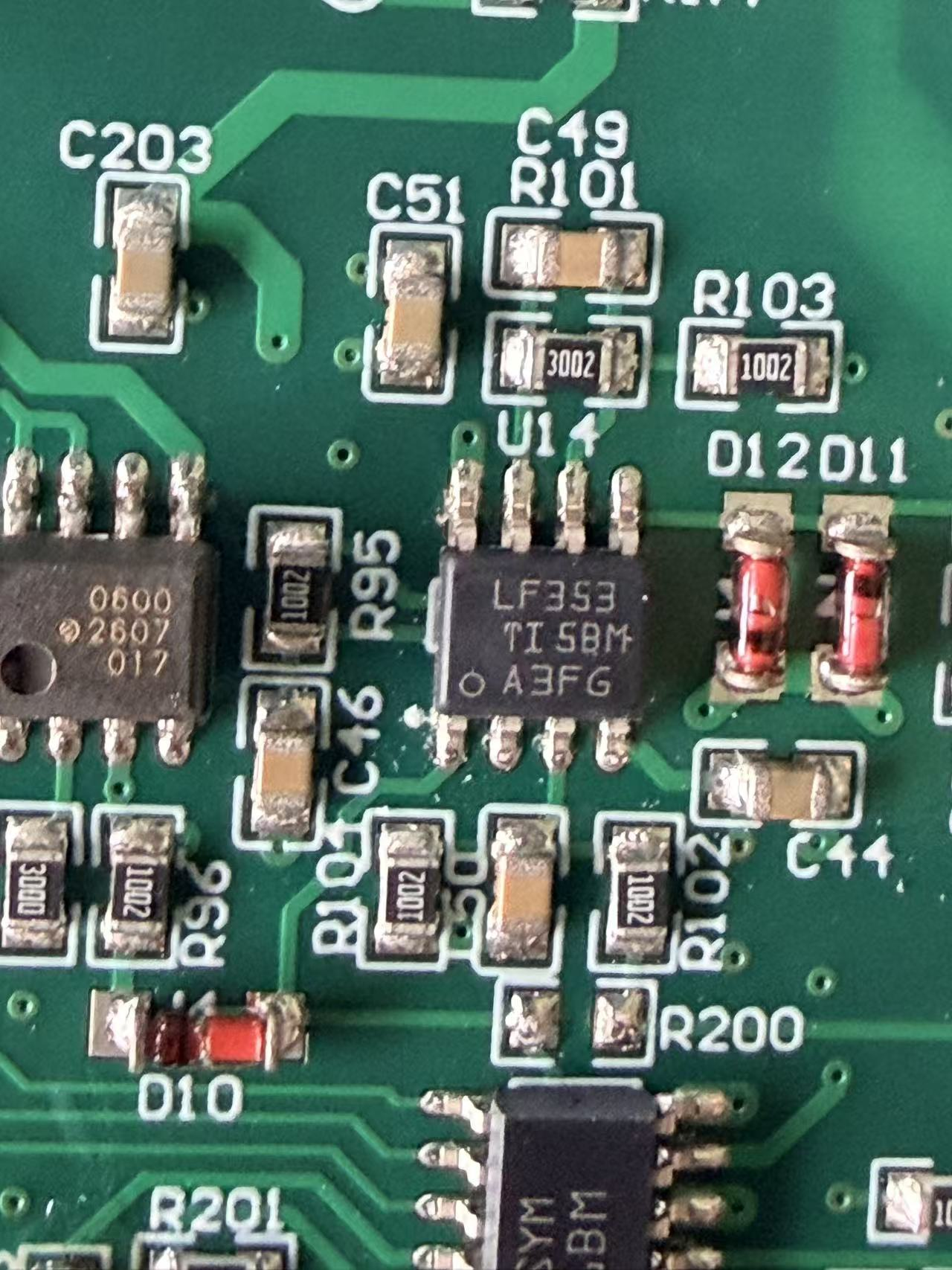
Thank you.
