请注意,本文内容源自机器翻译,可能存在语法或其它翻译错误,仅供参考。如需获取准确内容,请参阅链接中的英语原文或自行翻译。
器件型号:OPA354工具/软件:
您好:
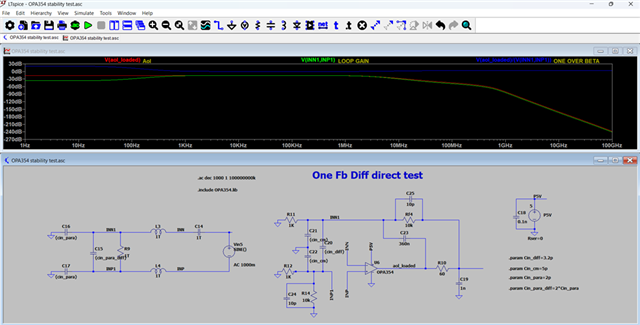
我尝试按照 TI 培训演示中所示的方法、在 OPA354 差分放大器的 LTspice 中运行稳定性仿真。 目标是通过绘制来提取相位裕度 Aol 、 β μ s 、和 此特性 。
以下是详细信息:
-
设置:
-
采用差分配置的 OPA354 的 LTspice 稳定性测试台。
-
的测量 Aol 、 β μ s 、和 此特性 设计方法相同。
-
-
期望:
-
Aol 应类似于数据表中的开环增益曲线(低频时为≈120dB)。
-
Aol 和 β μ s 应与某个频率相交、以允许相位裕度分析。
-
-
实际结果:
-
仿真值 Aol 内容 –16dB (远低于预期)。
-
因为 Aol 它很低、绝不会与相交 β μ s 频率下平衡曲线。
-
如果我仅将运算放大器型号替换为 执行部分第 777 段 )、仿真看起来正确、并按预期运行。
-
-
问题/请求:
-
为什么 OPA354 模型在此 LTspice 设置中产生如此低(而且不正确)的 Aol?
-
关于 OPA354 宏模型或设置、是否有需要进行调整的具体内容?
-
您能否纠正错误、并为我提供一个有效的仿真示例、以便可以清楚地提取相位裕度 (PM)?
-
我还附上了 LTspice 仿真文件(原理图和模型),以便重现问题。
提前感谢、
Idan