


在TI提供的库中,几种基本的数据类型的定义如下:
#ifndef DSP28_DATA_TYPES
#define DSP28_DATA_TYPES
typedef int                 int16;// = 2?
typedef long                int32; // = 4?
typedef long long           int64; // = 8?
typedef unsigned int        Uint16; // = 2?
typedef unsigned long       Uint32; // = 4?
typedef unsigned long long  Uint64; // = 8?
typedef float               float32;
typedef long double         float64;
#endif
但是,在实际的sizeof代码测试中,返回的值结果并不一样:
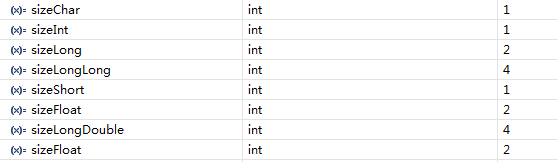
使用的代码是:
int sizeChar,sizeShort,sizeInt,sizeLong,sizeLongLong,sizeLongDouble,sizeFloat;

int main(void) {
	sizeChar = sizeof(char);
	sizeShort = sizeof(short);
	sizeInt = sizeof(int);
	sizeLong = sizeof(long);
	sizeLongLong = sizeof(long long);
	sizeFloat = sizeof(float);
	sizeLongDouble = sizeof(long double);

	return 0;
}
后续,继续测试,使用一个共同体,测试如下:
union u_temp{
	Uint32 _int32;
	unsigned char  _int8[4];
}temp;

int main(void) {
	temp._int32 = 0x12345678;
	return 0;
}

也就是说,假如char是正常的8位宽度的话,实际标注的Uint32的宽度实际上也仅仅是16位。只有使用到longlong才能提供32位宽度的数据类型。
