
hi,every one:
我最近在学习如何使用硬件I2C通讯来读取MPU6050,
但是遇到了一些问题:
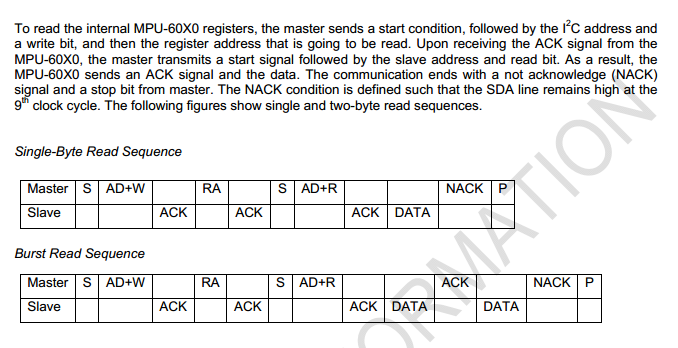
(1)MPU6050的读时序中,结束位产生之前需要产生一个NACK位,也就是将SCL拉高,翻了几遍手册,还是摸不着头脑该怎样产生这个NACK位,所以特来求助一下大家。
(2)同样是MPU6050的写时序,将I2CSTT开始位置位后并顺利发送了地址和第一帧数据,如果我想继续发送一帧数据,是不是需要要将TXRDYIFG置位?
谢谢!
2017年4月30日23:48:18
TAMK
This thread has been locked.
If you have a related question, please click the "Ask a related question" button in the top right corner. The newly created question will be automatically linked to this question.
hi,every one:
我最近在学习如何使用硬件I2C通讯来读取MPU6050,
但是遇到了一些问题:
(1)MPU6050的读时序中,结束位产生之前需要产生一个NACK位,也就是将SCL拉高,翻了几遍手册,还是摸不着头脑该怎样产生这个NACK位,所以特来求助一下大家。
(2)同样是MPU6050的写时序,将I2CSTT开始位置位后并顺利发送了地址和第一帧数据,如果我想继续发送一帧数据,是不是需要要将TXRDYIFG置位?
谢谢!
2017年4月30日23:48:18
TAMK
问题(1):
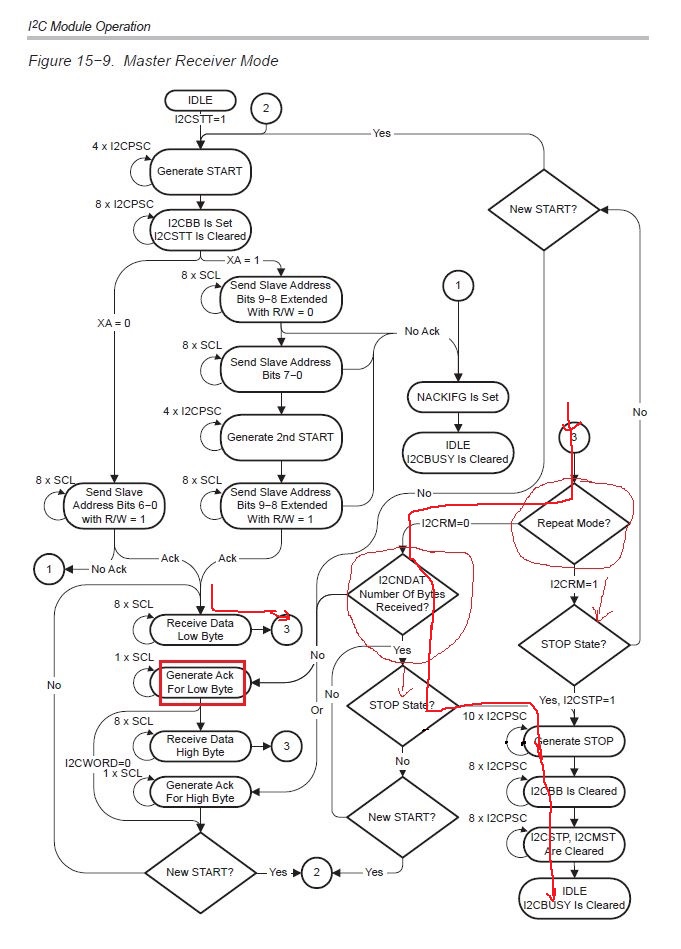
你所提的需求,可以支持。根据德州仪器MSP430芯片的官方文档《MSP430x1xx Family User's Guide (Rev. F)》中15.2.4章节,Figure 15-9. Master Receiver Mode(上图) 可以看出,当数据主机接收完最后一个byte之后,不会再产生ACK信号,直接会根据Repeat Mode决定是手动或者自动发送Stop信号。 建议直接采用I2CRM = 0的模式,此模式下,配置I2CTCTL = I2CSTT+I2CSTP; 当I2CNDAT个数据接收完之后,即自动发送Stop信号,最后一个数据不会产生ACK,即NACK。
问题(2):
继续发送数据无需置位TXRDYIFG。TXRDYIFG是发送完成标志,应该是用TXRDYIFG来判断上次发送是否完成。关于I2C的使用,可以参照下面的官方例程 fet140_i2c_13.c:
#include <msp430.h>
void Commstart (void);
void RXBytes (void);
void TXBytes (void);
volatile unsigned int i;
int main(void)
{
WDTCTL = WDTPW | WDTHOLD; // Disable the Watchdog.
P3SEL |= 0x0a; // Assign I2C pins to module
U0CTL |= I2C + SYNC; // Switch USART0 to I2C mode
U0CTL &= ~I2CEN; // Recommended init procedure
I2CTCTL = I2CSSEL_2; // SMCLK
I2CNDAT = 0x03; // Transmit Three byte
I2CSA = 0x4C; // Slave address
U0CTL |= I2CEN; // Enable I2C, 7 bit addr,
Commstart(); // MSP430 sends a 0x00 to the DAC
while(1)
{
RXBytes(); // RX 3 Bytes (MSB, LSB, Control)
TXBytes(); // TX 3 Bytes (Control, MSB, LSB)
}
}
void Commstart (void)
{
U0CTL |= MST; // Master mode
I2CTCTL |= I2CSTT+I2CSTP+I2CTRX; // Initiate transfer
while ((I2CIFG & TXRDYIFG) == 0); // Wait for transmitter to be ready
I2CDRB = 0x10; // Load Control Byte
while ((I2CIFG & TXRDYIFG) == 0); // Wait for transmitter to be ready
I2CDRB = 0x00; // Load MSByte
while ((I2CIFG & TXRDYIFG) == 0); // Wait for transmitter to be ready
I2CDRB = 0x00; // Load LSByte
while ((I2CTCTL & I2CSTP) == 0x02); // To prevent Arbitration Lost
}
void RXBytes (void)
{
unsigned char ctlbyte;
U0CTL |= MST; // Master mode
I2CTCTL = I2CSTT+I2CSTP; // Initiate transfer
while ((I2CIFG & RXRDYIFG) == 0); // Wait for Receiver to be ready
i = I2CDRB; // Receive MSByte from DAC
i = i << 8;
while ((I2CIFG & RXRDYIFG) == 0); // Wait for Receiver to be ready
i = i + I2CDRB; // Receive LSByte from DAC
while ((I2CIFG & RXRDYIFG) == 0); // Wait for Receiver to be ready
ctlbyte = I2CDRB; // Receive ControlByte from DAC
while ((I2CTCTL & I2CSTP) == 0x02); // Wait for Stop Condition
}
void TXBytes (void)
{
i = i + 1;
U0CTL |= MST; // Master mode
I2CTCTL |= I2CSTT+I2CSTP+I2CTRX; // Initiate transfer
while ((I2CIFG & TXRDYIFG) == 0); // Wait for transmitter to be ready
I2CDRB = 0x10; // Load Control Byte
while ((I2CIFG & TXRDYIFG) == 0); // Wait for transmitter to be ready
I2CDRB = i >> 8; // Load MSByte
while ((I2CIFG & TXRDYIFG) == 0); // Wait for transmitter to be ready
I2CDRB = i & 0x00FF; // Load LSByte
while ((I2CTCTL & I2CSTP) == 0x02); // Wait for Stop Condition
}
如有相关问题,建议参考TI官方文档和相关例程,均可于TI.com免费下载。